Google Calendar is one of the most powerful — and most widely used — scheduling tools available today. While many people use it for basic reminders and meetings, Google Calendar offers far more flexibility and control once you understand how it works.
This guide expands on the video tutorial above with a complete, up-to-date walkthrough of Google Calendar’s core features. By the end, you’ll understand how to create events properly, manage recurring schedules, work with multiple calendars, share calendars with the right permissions, and customize Google Calendar to fit your workflow.
Google Calendar interface overview
When you first open Google Calendar, the current day is highlighted, and the current time is shown with a red line in day or week view. This makes it easy to see where you are in your schedule at a glance.
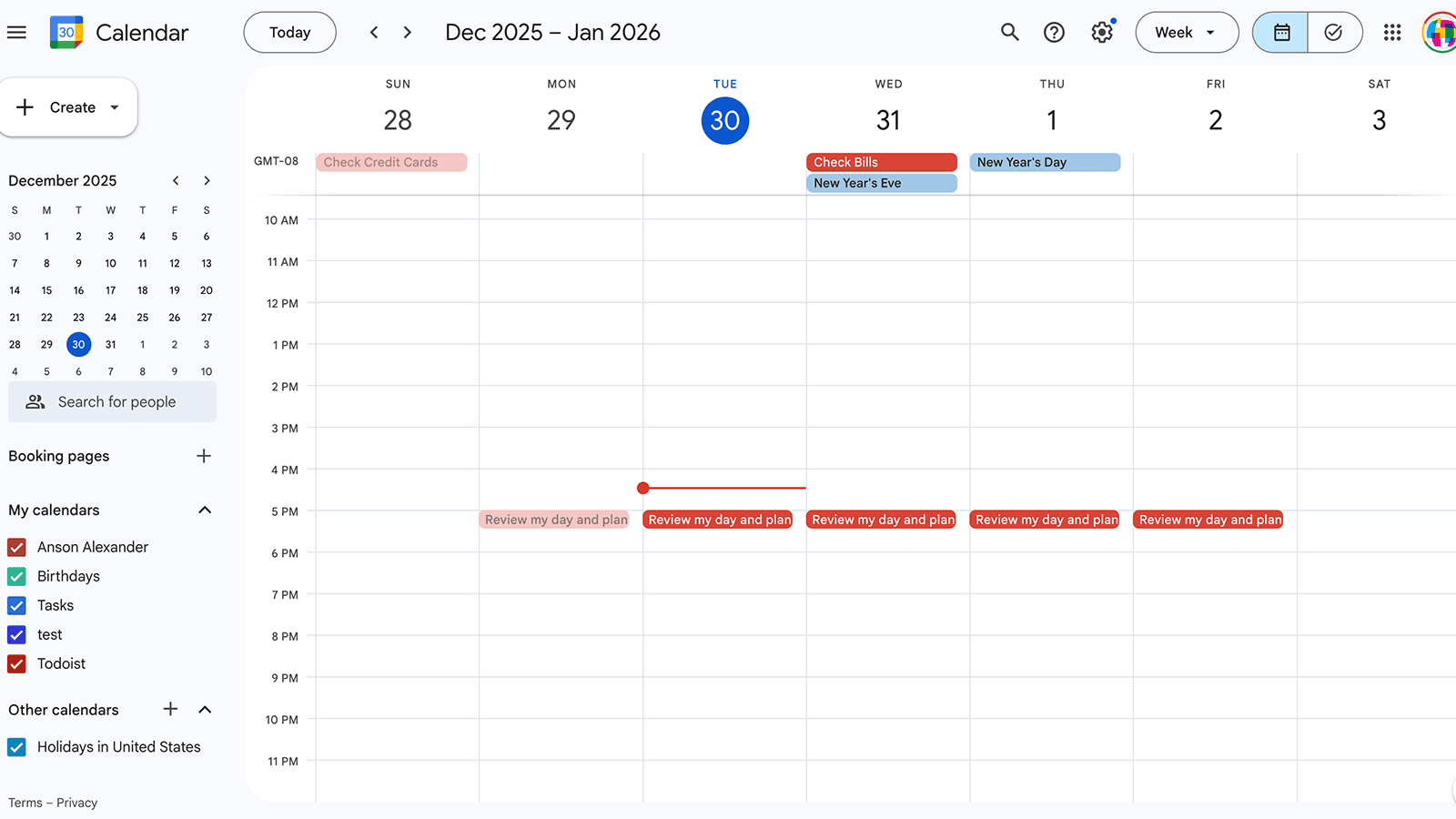
You can switch between Day, Week, Month, and Schedule views using the dropdown in the top-right corner. Schedule view is especially useful when you have a day packed with meetings because it lists everything in chronological order.
Creating events in Google Calendar
There are two main ways to create events in Google Calendar:
- Click the Create button in the top-left corner
- Click directly on a date and time in the calendar
Clicking a time slot opens the quick event window, but selecting More options opens the full event editor, which provides access to all event settings.
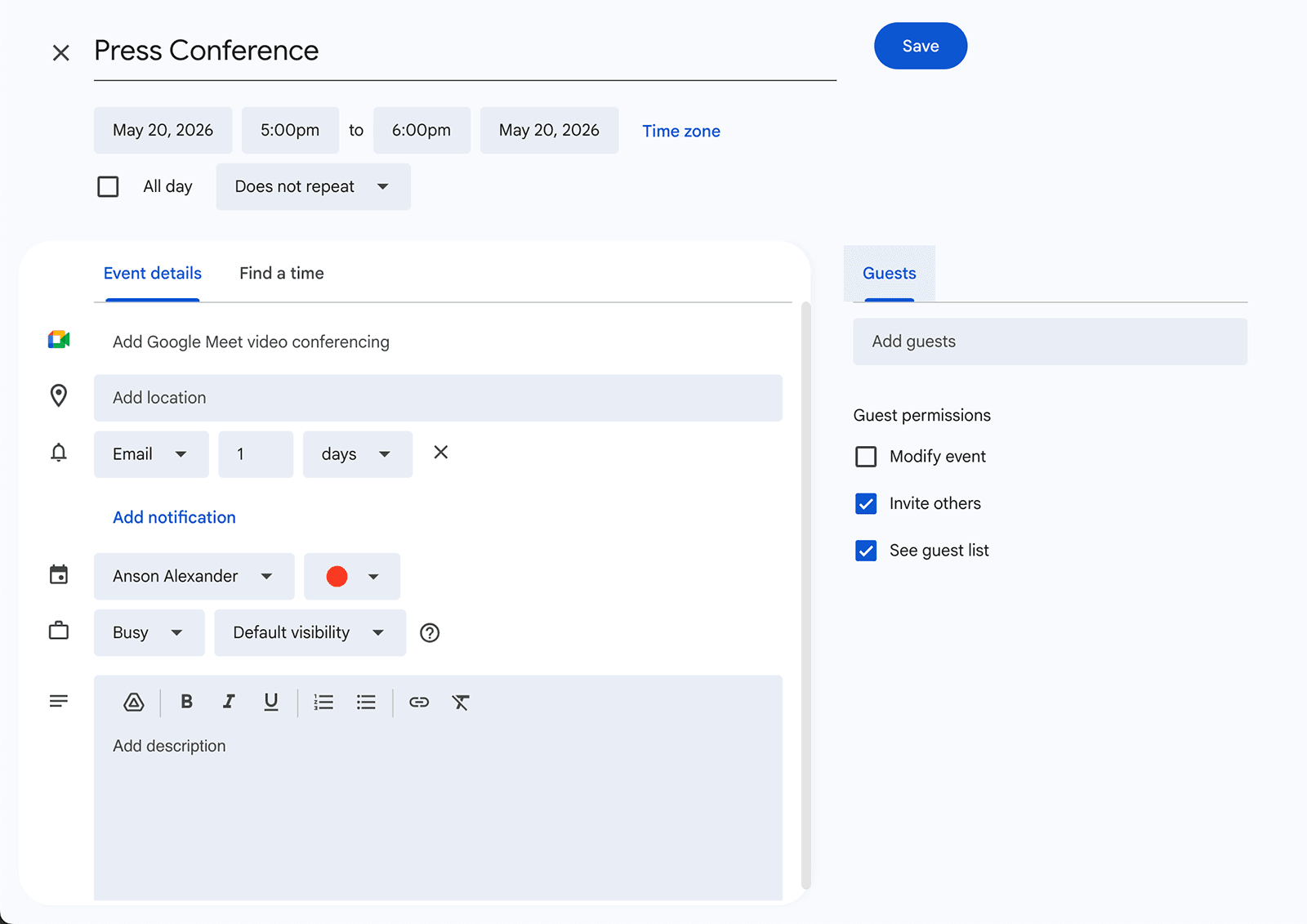
From the full event editor, you can:
- Set start and end times or mark events as all-day
- Add Google Meet video meetings automatically
- Add locations, descriptions, and file attachments
- Select which calendar the event belongs to
Recurring events and schedules
Recurring events are one of the biggest time-saving features in Google Calendar. Instead of recreating meetings or routines every time, you can schedule them to repeat automatically.
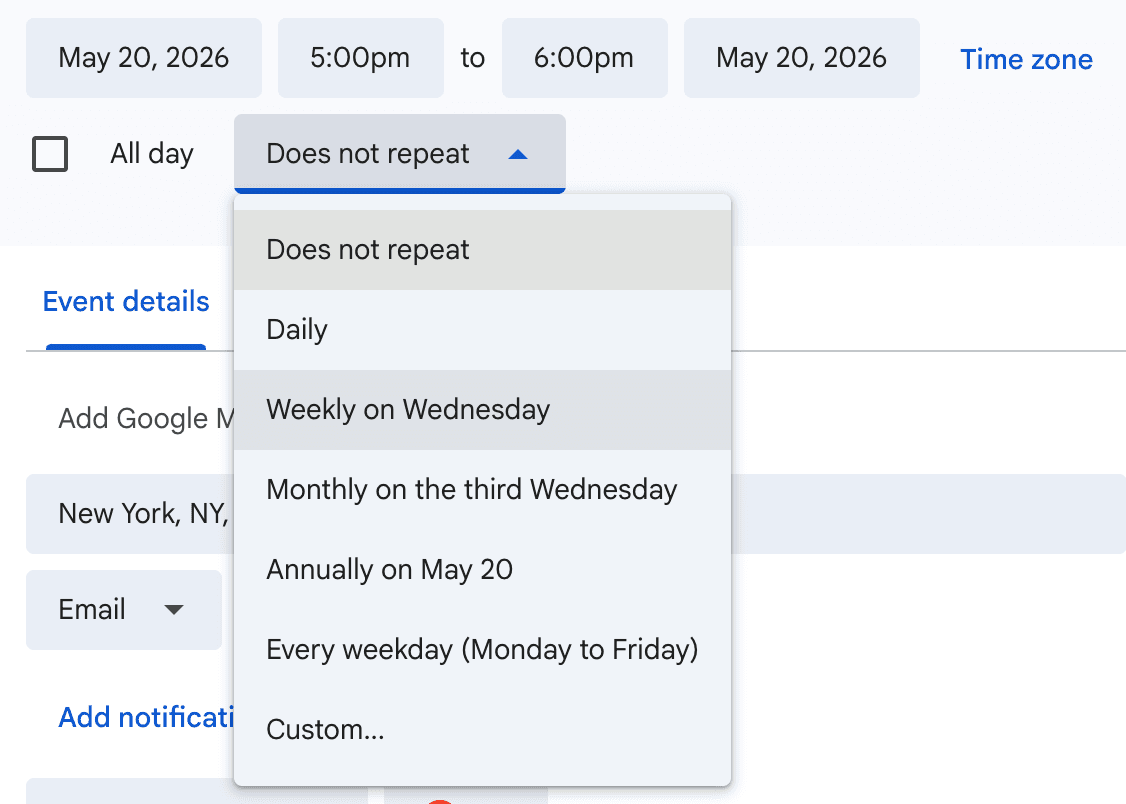
You can create daily, weekly, monthly, yearly, or fully custom recurring schedules. This is ideal for weekly meetings, standing appointments, and ongoing routines.
Inviting guests and suggested meeting times
Google Calendar makes collaboration easy by allowing you to invite guests to events. When guests also use Google Calendar, Google can suggest meeting times when everyone is available.
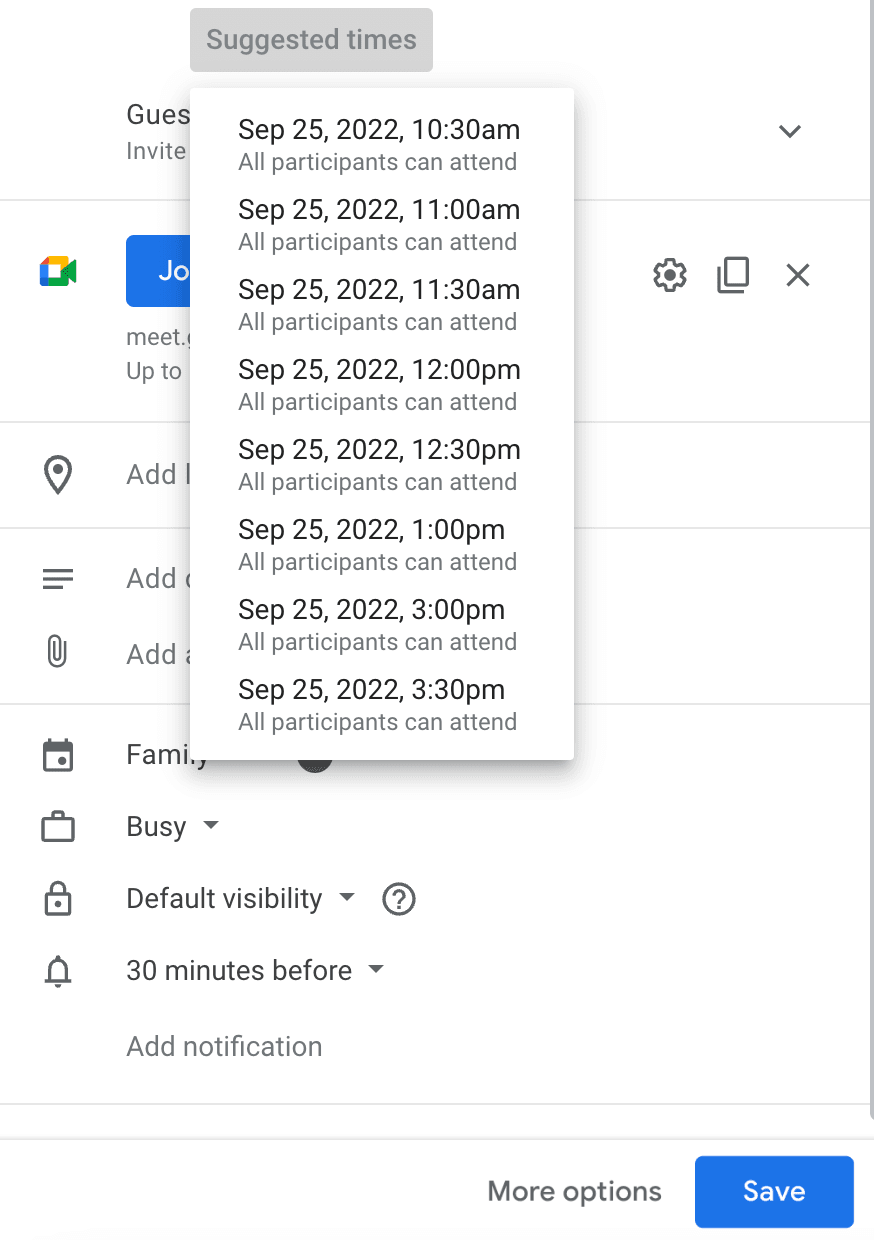
This feature is especially useful for teams and organizations where coordinating schedules manually can be difficult.
Using multiple calendars and calendar colors
One of Google Calendar’s most powerful features is the ability to create and manage multiple calendars. You might have separate calendars for work, personal life, family events, or volunteer activities.
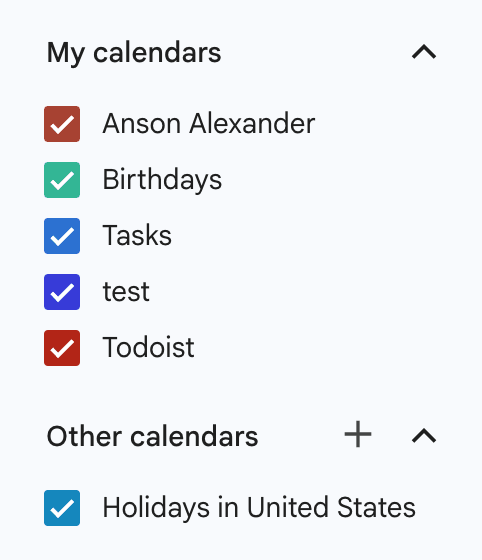
You can toggle calendars on and off and assign colors to quickly distinguish between different types of events.
Sharing calendars and permissions
Google Calendar allows you to share calendars with specific people or make calendars public, depending on your needs.
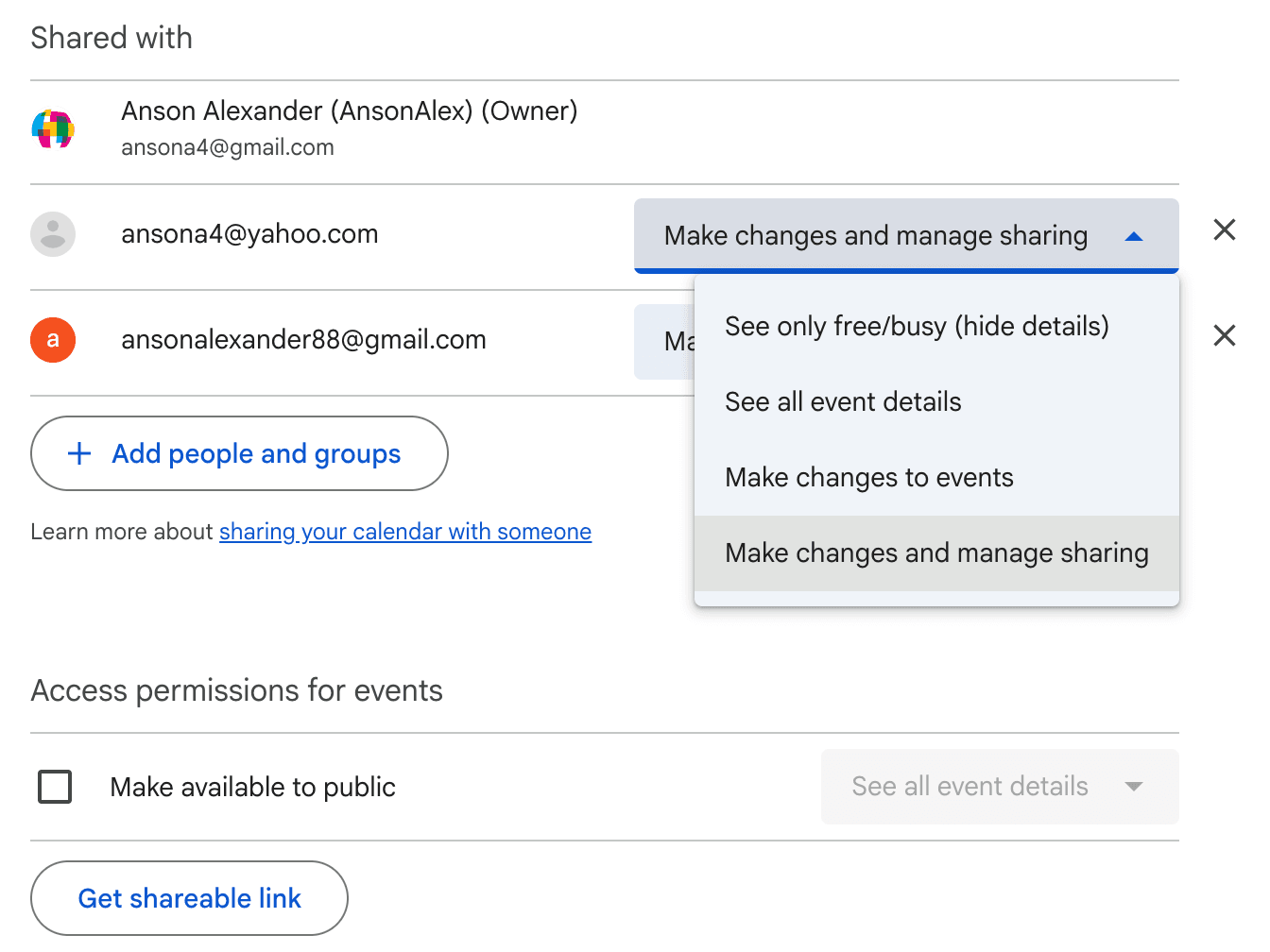
You can control whether others can see only free/busy information, view full event details, or make changes and manage sharing.
Important Google Calendar settings to review
Many users never adjust Google Calendar’s settings, but a few small changes can significantly improve how the calendar works for you.
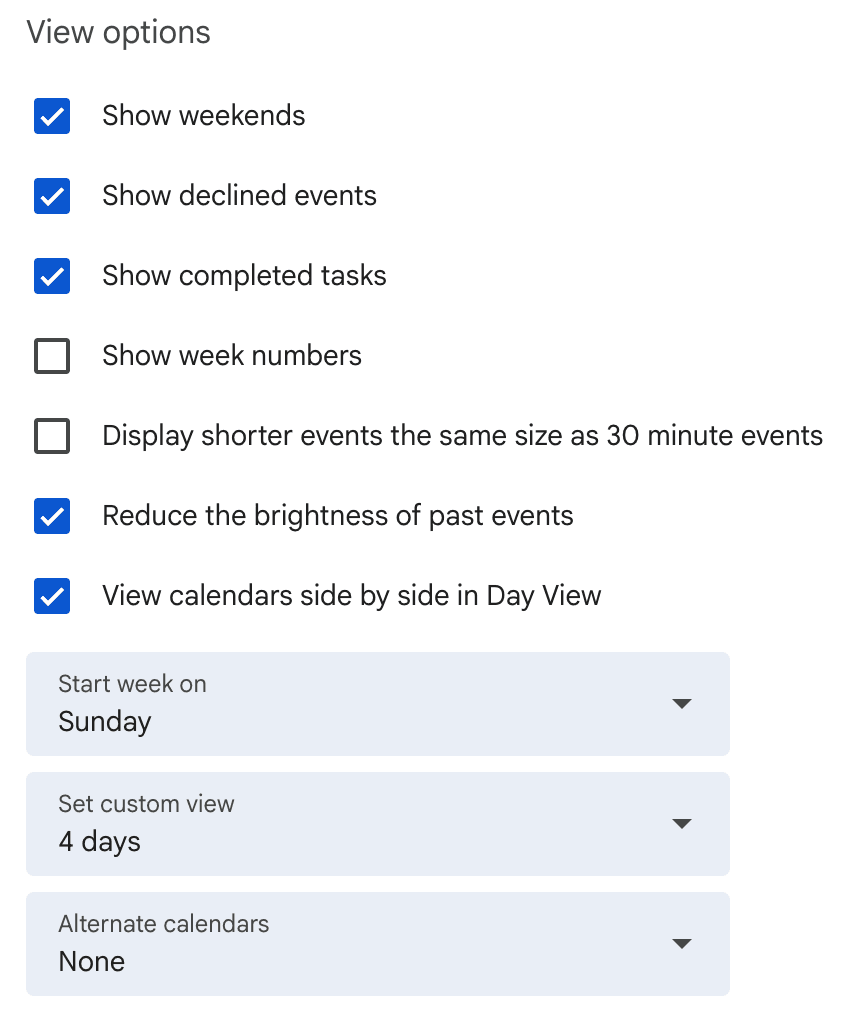
Key settings worth reviewing include default event duration, working hours, week start day, time zone settings, and calendar density options.
Final thoughts
Once you understand how events, calendars, sharing, and settings work together, Google Calendar becomes far more than a basic scheduling tool. It becomes a system for managing your time intentionally and staying organized across both personal and professional commitments.