Hidden Publish Date Finder
Paste any URL below to quickly check the earliest Google index date and archived history.
Quick answer: There’s no single “perfect” way to prove the original publish date for every webpage. The most reliable approach is to find the earliest credible evidence the page existed — starting with Google’s earliest indexed signal, then confirming with the Wayback Machine when possible.
Fastest way to get a credible “first published” date
- Check the page visually (byline, footer, “Updated” label, or even the URL).
- View Page Source and search for common date fields (takes 30 seconds).
- Use Google indexing signals for the exact URL (earliest evidence Google can show).
- Confirm with the Wayback Machine (best independent proof when snapshots exist).
Table of Contents
- What date does Google show in search results?
- Why are publication dates missing from some articles?
- Why do publishers hide dates?
- Direct page + source code checks
- Google search tricks (index date + URL date patterns)
- Archival + external tools (Wayback, validators)
- Most reliable methods to find the hidden publish date
- Additional verification methods
- Common pitfalls (why dates look wrong)
- Best-practice workflow (fast + reliable)
There was a time when most articles clearly displayed a publication date. Today, many websites either hide dates entirely or show dates that don’t reflect when the content was originally published.
Even when Google displays a date in search results, that date is not guaranteed to be accurate. Publishers can change visible dates at any time — and Google may then show an updated date instead.
I personally have pages that were first published over a decade ago. If I change the publish date in WordPress today, Google may show the page as “new” in search results — despite its long history.
The dates you see in Google Search are not always the original publication dates.
By the end of this guide, you’ll know what Google is actually doing, why dates are hidden, and the fastest reliable workflow to uncover the earliest known publication date for almost any page.
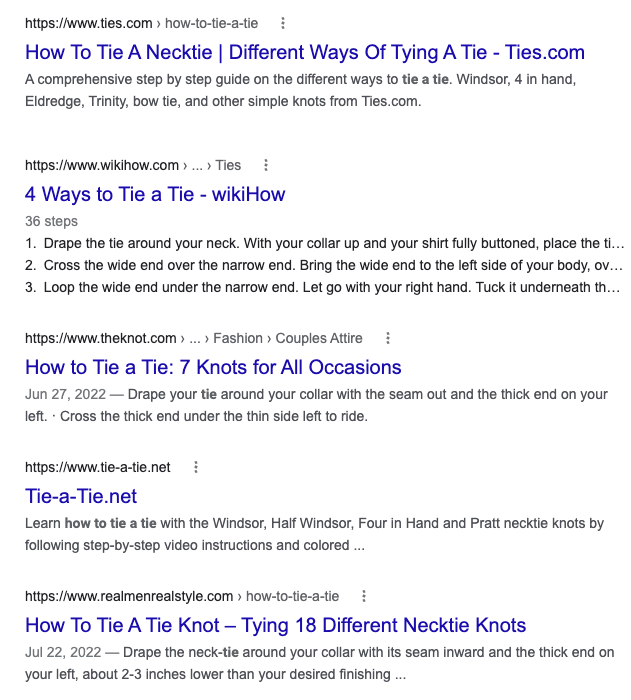
What date does Google show in search results?
Google does not rely on a single source to determine which date to show for a webpage.
Google has explained that search results may display a date based on multiple signals, including publisher-provided dates, structured data, visible dates on the page, and other cues in the content. In other words: Google is trying to show the most useful date, not necessarily the original publish date.
- The date specified by the publisher (visible on the page)
- Structured data such as
datePublishedordateModified - Visible dates in page content (including footers and bylines)
- Other contextual signals Google extracts from the page
Key takeaway: The date shown in Google Search is not always the date an article was first published — it’s the date Google believes is most useful based on the signals it can detect.
If you want the authoritative explanation straight from Google, these references matter most: how Google chooses a date to show and Article structured data (including datePublished / dateModified).
Why are publication dates missing from some articles?
Publishers can choose to hide publication dates on their pages — and many do.
Some sites structure their pages so the date is not obvious to readers (or to search engines). Others emphasize “evergreen” value over a specific timestamp. And many sites show only a “last updated” date (or no date at all) because they don’t want readers to dismiss content based on age alone.
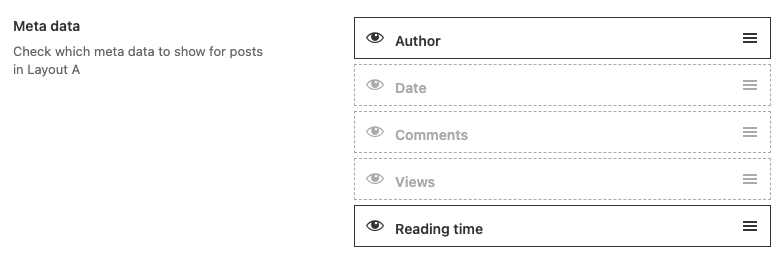
Why do publishers hide dates?
Here are the most common reasons publishers choose not to display dates:
- To avoid users dismissing content as “outdated” without reading it
- Because articles are updated over time and a single date can be misleading
- To reduce bias when the content is evergreen and still accurate
For evergreen content that evolves over many years, “published in 2012” can scare people off even when the article is fully updated and more accurate than newer posts.
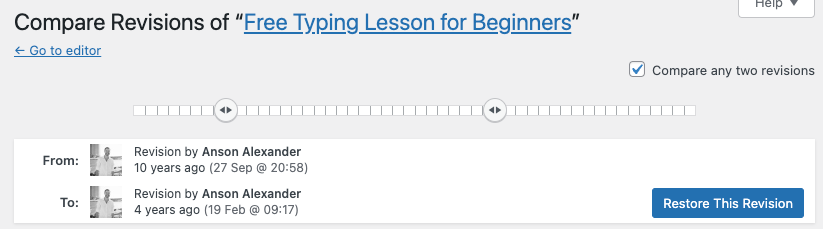
Direct page + source code checks
Before you jump into external tools, do the simple checks first. You’d be surprised how often the date is visible — just not where you expected.
1) Check the page visually
- Under the headline or near the author name
- At the very bottom of the page (footer/copyright area)
- Near the top image / hero section (small gray text)
- Inside a tooltip on “Updated” / “Last revised” labels
2) Inspect the URL for a date pattern
Some sites embed dates directly in URLs (like /2024/05/29/ or /2024-05-29/). This isn’t always the true publish date, but it’s a useful clue when multiple signals agree.
3) View Page Source and search for date fields
Right-click the page and choose View Page Source. Then use Ctrl+F (Windows) or Cmd+F (Mac) and search for common date fields below.
datePublished
article:published_time
pubdate
publish
dateModified
article:modified_time
modified
If you find dates here, treat them as publisher-provided claims. They can be accurate — but they can also be changed without notice, so verify when the date truly matters.
Don’t get fooled by “last updated”: a page can be updated today even if it was originally published years ago. If you’re trying to prove first published, you need an early independent signal (Google/Wayback), not just what the page claims right now.
Google search tricks (index date + URL date patterns)
Google doesn’t hand you a perfect “published on” timestamp for every page, but it does provide a few practical signals you can use to estimate when the page first appeared publicly.
Index context: use “More about this page”
Search site:example.com (or search the exact page URL). In the results, click the three dots next to the result and look for More about this page. On some results, Google shows context that helps you estimate how long a page has been around.
URL date search: find pages with a date in the URL
If the site uses dated URLs, this can help you locate older versions, related pages, or category archives that confirm a timeline.
site:example.com inurl:2024/05/29
inurl:example.com/2024/05/29
Advanced filter: use Google’s “qdr” shortcut
For some searches, adding &as_qdr=y15 to the end of a Google search URL filters to results from the last 15 years. This is not a publish-date detector, but it can help narrow to older indexed results when you’re investigating history.
&as_qdr=y15Archival + external tools (Wayback, validators)
When you need stronger evidence than “Google showed a date,” use tools that can independently confirm the page existed at (or before) a certain time.
Wayback Machine (Internet Archive)
The Wayback Machine can provide hard evidence: the page existed at least by the date of the earliest saved snapshot. Start here: web.archive.org.
Important: No snapshots doesn’t mean the page didn’t exist. It only means it wasn’t captured (or wasn’t capturable) at the time (robots rules, paywalls, blocked crawlers, or it simply wasn’t archived).
If you want detail on why some pages aren’t saved, the Internet Archive explains it here: Wayback Machine: General Information.
Structured data validators (see what the page “claims”)
These won’t prove a date is true, but they make it easy to see what the page is publishing via structured data:
How to find the hidden publish date of an article (most reliable methods)
No method can guarantee the exact moment a page first went live (especially if it was published quietly, later redirected, or blocked from crawlers). What you can do is find the earliest credible evidence across multiple sources.
Method 1: Google’s earliest indexed date signal (fast, often the best first check)
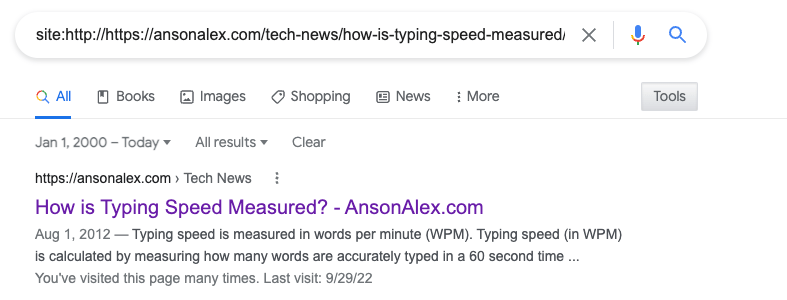
This method attempts to surface the earliest date Google associates with that exact URL in results. It’s a strong signal — but it’s still a signal, not a sworn affidavit. Google can show different dates depending on what it detects.
Pro tip: You’ll usually get the cleanest results when you search the full URL (not just the domain) using a site: query, then look for the earliest date Google displays for that exact page.
https://www.google.com/search?tbs=cdr:1,cd_min:1/1/2000&q=site:URLGoesHere- Replace URLGoesHere with the full page URL (include https://).
- Press Enter and review the result snippet(s).
- Look for the earliest date Google shows for that URL.
If Google shows a date here, it’s often close to the page’s first real appearance — especially for pages that have been stable and publicly crawlable since publication.
Method 2: Wayback Machine earliest snapshot (best independent confirmation)
The Wayback Machine can provide hard evidence: the page existed at least by the date of the earliest saved snapshot.
- Open web.archive.org.
- Paste the page URL and search.
- Check the earliest year that shows captures.
- Open the earliest snapshot and verify it’s the same page (not a redirect or placeholder).
Method 3: Check page source + structured data (publisher-provided, easy to fake, still useful)
Many sites include dates in their HTML even when they hide them visually. You’re looking for:
datePublished(structured data)dateModified(structured data)- Meta tags like
article:published_time/article:modified_time(Open Graph)
If you want to see what Google recommends publishers do (and why displayed dates can change), this is the most important reference: Help Google Search know the best date for your page.
Additional verification methods
When you really need confidence, don’t rely on only one signal. Use multiple sources and look for agreement.
- On-page clues: tooltips, footer dates, byline blocks, or a
<time>element. - Oldest comments: sometimes the oldest visible comments establish a “no later than” date.
- Redirect history: the “true” publish date might belong to an older URL that now redirects.
- Structured data tools: Rich Results Test + Schema Validator to see
datePublished/dateModifiedquickly.
Common pitfalls (why dates look wrong)
- The page was republished: CMS date changed and Google started showing a newer date.
- The page moved: URL changed and redirects hide older history.
- The site blocks crawlers sometimes: indexing gaps create confusing “first seen” signals.
- Structured data is inconsistent: Google may pick a different date signal than you expect.
- URL dates can mislead: the date in the URL may reflect a category system, not publication.
Best-practice workflow (fast + reliable)
- Check the page visually (title/byline/footer/URL).
- View Page Source and search the date fields list.
- Use Google’s earliest indexed signal for the exact URL.
- Confirm with Wayback Machine if snapshots exist.
- Decide what you need: “earliest evidence it existed” vs “publisher’s claimed publish date.”
Understanding how dates work — and how easily they can be changed — helps you judge content accuracy, especially for time-sensitive topics like news, software changes, and SEO tactics.